
Play is often called the “work of childhood,” but to a child, it is pure, unadulterated joy. While children see a playground as a kingdom of adventure, educators and parents recognize it as a vital classroom without walls. Beyond the laughter and the scraped knees lies a world of physical, cognitive, and social development.
Why Playgrounds Matter: More Than Just Fun
Playground equipment serves as the catalyst for growth. When children engage with outdoor play structures, they aren’t just passing time; they are building the foundation for their future selves.
• Physical Health: In an age of screens, playgrounds encourage “active play.” Climbing, running, and swinging improve cardiovascular health, grip strength, and motor coordination.
• Social Intelligence: Playgrounds are often a child’s first experience with a “mini-society.” They learn to take turns, resolve conflicts (who gets the slide first?), and cooperate in group games.
• Cognitive Development: Navigating a complex climber requires problem-solving. Children must calculate distances, plan their next move, and assess risks—skills that translate directly to logical thinking in the classroom.
• Emotional Resilience: Overcoming the fear of a high slide or finally mastering the monkey bars builds immense self-confidence and “grit.”
Understanding the Systems: Multiplay vs. Standalone
When designing a play area, equipment generally falls into two categories: Multiplay Systems and Standalone Systems.
1. Multiplay Systems (The All-in-One Adventure)
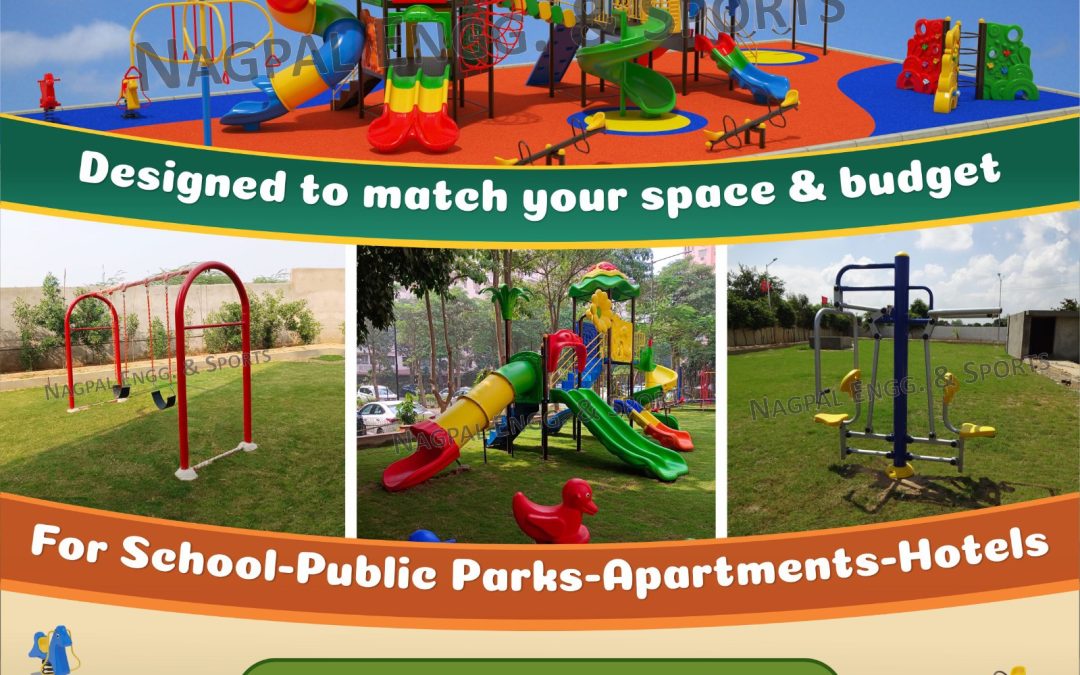
A Multiplay System is a large, integrated structure that combines various play elements—like slides, climbers, bridges, and tunnels—into one cohesive unit. Think of it as a “play station” for the outdoors.
Advantages of Multiplay Systems:
• Space Efficiency: It packs multiple activities into a single footprint, making it ideal for schools or housing societies with limited space.
• High Engagement: Because there are so many ways to navigate the structure, children stay engaged longer. They can go from a climber to a bridge and down a slide without ever touching the ground.
• Theme Integration: These systems can be designed as pirate ships, castles, or jungles, fueling imaginative “role-play.”
2. Standalone Systems (The Classics)
Standalone equipment refers to individual units that provide a specific type of movement or play. These are the “classics” we all remember from our childhood.
The Stars of the Playground: Standalone Equipment
Each piece of standalone equipment is designed to target a specific developmental milestone.
The Swing
Swings are the heart of any playground.
• Importance: They develop a child’s sense of balance and body awareness (proprioception). The rhythmic motion of swinging is also known to be highly therapeutic and calming for many children.
The Slide
Whether it’s a tube slide or a wave slide, the thrill remains the same.
• Importance: Slides teach children about gravity and spatial awareness. The act of climbing the ladder also builds lower-body strength and coordination.
The Merry-Go-Round
This rotating platform encourages group play.
• Importance: It teaches centrifugal force (science in action!) and requires teamwork, as children must coordinate their pushing and pulling to get the speed just right.
The Seesaw
The ultimate lesson in cooperation.
• Importance: You cannot enjoy a seesaw alone. It teaches children about weight, balance, and the necessity of working with a partner to achieve a common goal.
Climbers (Monkey Bars & Nets)
• Importance: These are essential for developing “upper body strength.” Climbing builds bone density and enhances “cross-lateral” brain function (using both sides of the body simultaneously).
Spring Riders
These are the bouncy animals or vehicles mounted on heavy-duty springs.
• Importance: Perfect for younger children, they help develop core stability and rhythm while encouraging imaginative play.
Beyond the Play: Essential Garden Equipment
A great playground isn’t just about the play structures; it’s about the environment around them. To make a park functional and comfortable, “Garden Equipment” is essential.
• Garden Benches: These provide a resting spot for tired children and a vantage point for parents and supervisors. They turn a playground into a social hub for the community.
• Garden Shelters (Gazebos): Protection from the sun and sudden rain is vital. Shelters allow the playground to be used throughout the day, providing a cool spot for children to hydrate.
• Dustbins: Cleanliness is the cornerstone of safety. Strategically placed bins teach children about environmental responsibility and keep the play area free of tripping hazards and pests.
The Role of Nagpal Engineering and Sports
In the competitive landscape of playground manufacturing, Nagpal Engineering and Sports has emerged as a leader in creating safe, innovative, and durable play environments.
Their role in the industry is defined by three main pillars:
1. Safety-First Engineering: Understanding that children’s safety is non-negotiable, they utilize high-grade materials and rounded edges, ensuring that all equipment meets rigorous safety standards.
2. Innovation in Design: They have pioneered modern Multiplay systems that are not only physically challenging but also visually striking, helping to modernize urban parks and school grounds.
3. Durability for the Elements: Recognizing the harsh outdoor conditions, their equipment is built to resist corrosion, UV damage, and heavy daily use, ensuring that the investment of a school or park lasts for decades.
By blending engineering precision with a deep understanding of child psychology, Nagpal Engineering and Sports doesn’t just build equipment; they build the “arenas of childhood memories.”
Conclusion
A playground is much more than metal and plastic. It is a vital ecosystem where children learn to be brave, social, and healthy. Whether it is the sprawling complexity of a Multiplay system or the simple joy of a swing, this equipment is the foundation of a happy childhood.